

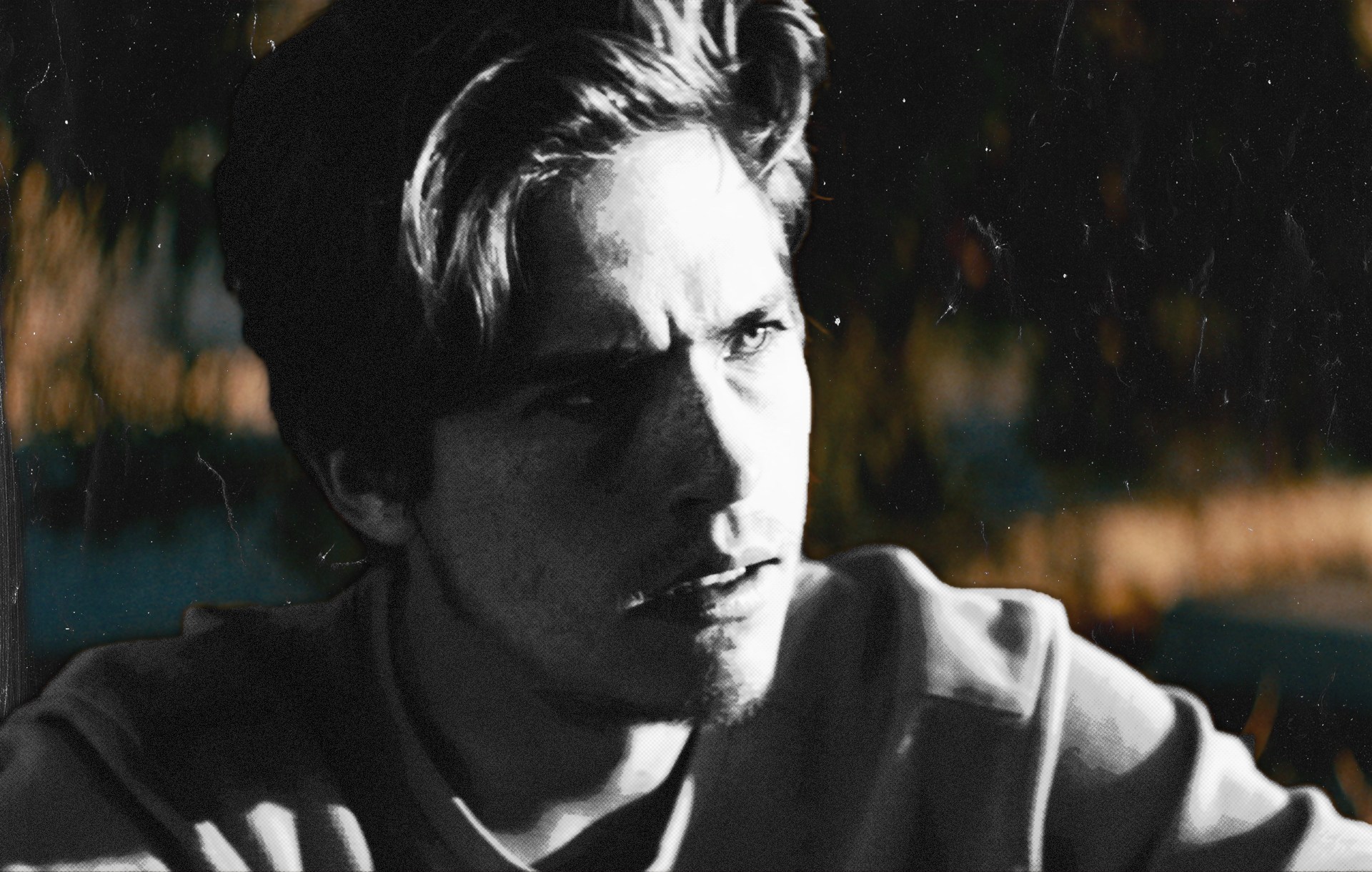
[Published at Living Life Fearless] From child actor to leading man as an adult, Dylan Sprouse’s rare career trajectory is a testament to both his talent, as well as his commitment to the craft of acting. Sprouse is well known for his formative work on projects such as Big Daddy and The Suite Life of Zack & Cody. However, Sprouse left Hollywood in 2010 to focus on getting a degree from NYU, ultimately graduating in 2015. When he returned to acting, Sprouse made it a point to take back some of the agency that he didn’t have as a child. With Dismissed, Banana Split, After We Collided, and the upcoming eponymous Chinese adaptation of the Puccini opera Turandot, Sprouse is taking roles that not only interest him, but also those which can provide a fruitful and fulfilling experience.
Before Turandot, Sprouse’s next film, Tyger Tyger, explores the highs and lows of addiction against the backdrop of a global pandemic. Shot before COVID-19, this fractured adaptation, if you will, of The Wizard of Oz, takes place entirely in Slab City, California, and uses Slab City residents for both crew and non-actor. Spike Lee mentee Kerry Mondragon’s directorial debut is an American millennial ode to pushing the limits of life and reality in the vein of Trainspotting.
On the eve of Tyger Tyger‘s release, I spoke with Sprouse about the unique production in Slab City, working with Mondragon, preparing for the role of an addict, his years as a child star, the upcoming Turandot, and more.
What intrigued you about Tyger Tyger?
It’s super experimental, and it’s super guerrilla, in general. Honestly, I was intrigued, initially, because when I read the script, it was written very visually, and I’m a visual learner. So I knew I had to talk to the director [Kerry Mondragon] about it because I thought that the idea was super interesting, I just needed more. I needed to know what was going on. And so I met him, and we talked at length about his own past. We talked about ideas on drug use, ideas on love and addiction, in general, and it sold me. And then he told me about how this movie was going to be shot and where, and it crossed off a checklist in my mind — which is one of my big choices for making films, is the experience I’m going to have on set — and I knew this was going to be a doozy, so I was gung ho from then on forth.
The film is almost prescient in its pandemic setting.
Yeah. It’s that mysterious fount that writers tap into where it’s almost like it’s foresight.
As you mentioned, Tyger Tyger is quite a unique production, even as an outsider looking at it from the outside. As an insider, what was the on set atmosphere like, particularly with the Slab City crew members and the non-actors?
Slab City welcomed us with open arms, but the only reason that was the case was because Kerry and Jay, who was another member of our crew, had been down there, integrating themselves into the community for a little while ahead of time. The Slab City folks had a bad experience with a prior film production, and so they were wary of us. But once that was eased up, they welcomed us with open arms, and everybody on the cast and crew was also welcoming them with open arms, and so the entirety of it was pretty awesome. I gotta be real — it was an awesome experience. I have very, very fond memories from the shoot, in general.
It looked like a really fun set. Coupled particularly with Kerry’s visual style, working with non-actors certainly adds to the realism of the film. How did Kerry direct the actors and the non-actors during production?
He had a similar approach with both, and Kerry was exceptional in his filming of this because he knew that, in order to get the right performances, it needed to be a little loosey-goosey. And so he gave everyone a wide girth — enough to improv and interpret the surroundings in our own way — while at the same time providing the backbone of the script and the dialogue. It wasn’t super rigid, but it still drove the scene forward. That’s why a lot of the performances seem almost effortless. A lot of it was dialogue, just us speaking to each other, informed by the backbone of what’s happening in the scene. And I’m sure that made for a difficult edit, but in terms of performances, it felt very real and honest. And the hardest part about the non-actors from the Slab joining us was that — the nature of Slab City folks is that, from one day to the next — they’re traveling a lot. And so whereas one day, we would shoot a scene with someone who we needed for the next day, the next day, they would’ve already hopped a freight train to their next location, which was super cool and endearing, but difficult to make a schedule out of.
You’re almost building your schedule around them. How much of the dialogue was improvised?
About 40% of the dialogue was completely improvised, which is a large amount. But improvised insofar as we had the dialogue in the script to lead us into what we should be saying and what points we should be hitting. So it was a large amount, but it’s a testament to Kerry’s writing that it was solid enough for us to get what we needed.
Tyger Tyger is a modernization of The Wizard of Oz, in many ways. How did Kerry articulate this adaptation and its addiction allegory to you?
Kerry always framed it as a love addiction to me. And I thought that was very astute, because Luke, my character, is addicted, but he’s addicted to everything. And he’s trying to find himself so desperately that he’s losing himself when he feels like he’s not on something. Kerry, having experienced his own past, which he’s very open about — and his own struggles with addiction —was obviously a major help in informing me how we make this a reality. Similarly, all the characters in it are addicted to something, and they’re representations of some form of addiction, but that doesn’t necessarily mean negative connotation. And that’s why I was particularly drawn to this script, too — because, having known a plethora of drug abusers and addicts in my life, and having experienced them firsthand, I can say, with confidence, that almost all of them are the greatest lovers of life, in general. They partake in the biggest fill that they can in everything. And so, reading this script, I was pleasantly surprised to see that it wasn’t just a grim, dark D.A.R.E. commercial of why to stay away from drugs, but it also depicted some of the joys that these people have in the scenarios that they’re thrust into; the highs and the lows, which I thought was a more honest depiction of these things, while still tackling the darkness that surrounds it, too.
And so many famous artists, to that point, use, or have used, drugs to explore, what life has to offer, as well as push the confines of reality. You mentioned you know addicts close to you. Did that, and this role, prompt you to do any research into artists or famous addicts?
Absolutely. Part of my process is a lot of homework in regards to (addiction), and even how to depict it. But I will also say that, regarding that, who we had surrounded ourselves with as both cast and crew were, obviously, infinite wells of resource that we could tap into, as creatives, to help us. Again, that’s why I think Kerry’s observation about making this an addiction to love was so much more depictable because this is something I had seen as evident, and artists, in that way we’re talking about — this might be a little tangential — artists chase the experience of things. And to boil it down and say that people are addicted to drugs is one thing. Yes, of course, they are, chemically. But this is also an addiction to experience of things, experiential things. And him framing it in these lights was really helpful to me.
Also, the nature of the feeling that Luke has — particularly, not knowing who he was or not feeling like himself unless he was high, trying to struggle with finding what his base parts were when he wasn’t high — that’s something that a lot of people could potentially relate to. And having done my own research, and knowing folks on my own who have similar experiences, I’m thankful. I think it came across. So I’m happy that I had both the cast and crew to help me with that.
It was an extremely authentic performance. In your upcoming film, Turandot, not only did you learn sword fighting and martial arts, but you became fluent in Mandarin, as well. What was that process like?See also
It was funny because, now that you mention it, I went right from the six-month-long shoot in China to jumping right into Tyger Tyger, so very, very different roles and both extremes, in their own way. But I was thrust into Turandot. In terms of Mandarin, I had a talk with our director [Xiaolong Zheng], who only spoke Mandarin. The difficulty about Mandarin is that it’s tonal language. As English speakers, we’re very used to emphasizing our words, even as I just did in this sentence. But in terms of emphasis, the emphasis that you use in Mandarin, for those who don’t know, is the actual understanding of the sentence.
So divorcing the emphasis in my voice from my facial reactions required a little bit more than I had anticipated. Out the gate, I was like, “Hey. I can get the language perfect for you, but realistically, the performance might suffer a little bit.” And then, “Or I can get the performance perfect, and I can flub some of the emphasis of Mandarin and mess up a little bit, and we can do it in post, and we can just get the performance perfect.” And he settled on the performance. But, eventually, down the line, it obviously got a lot easier. But it helped that I was doing the martial arts. It helped that I was horseback riding and sword fighting and doing all of these things for a long period of time because I was so immersed in what I was doing that I couldn’t help but be extremely focused. There was no time for me to not be focused. So I was grateful. Both of these films, side by side, are easily the most wild set experiences I’ve ever had.
You’ve been in the spotlight for almost three decades, since you were a child. How has the industry changed, in your opinion, since you first started acting?
My experience is I have a lot more agency now. I was able to take a lot of this back into my own hands, and that was my primary goal, in a lot of ways, as I became an adult. Before, I wasn’t an adult, so I wasn’t making all of my decisions. Now that I am, and I’m back in the industry, I’m able to be more selective about what I do, and I’ve definitely selected doing roles that I know are going to be amazing experiences on set for me as a human.
These are the things that I thrive and live for. They’re the things that make acting so great. I don’t know any other industry that would fly you out to China to train with swords, learn a language, and fight on horseback for six months in an amazing and beautiful country where I would never have experienced something like that otherwise. I would never have experienced something in Slab City and Bombay Beach, and in a way where I felt like I was being productive, unless it was for Tyger Tyger. And that is what I really thrive for. I thrive for telling stories with talented individuals who feel the same way. So my experience has changed vastly now. This is a little crass, but I really do this all for the personal experience, at the end of the day, and not about the more temporary devices that come from it.
That’s admirable. Looking back, do you have a proudest work as a child?
I don’t know if I could say anything particular [for] proudest work as child. Part of what I remember most being a working child is the experiences on set, like we were talking about. It’s funny because I depart from the finished product, usually. I do. I love the finished product of a film because it reminds me of the experiences I had on set. I know a lot of actors will talk about how they don’t like to see themselves on camera, or they don’t like to watch themselves. My problem is not with watching myself. My problem is that I just care less about watching myself than I did for filming the thing. So by the time that it’s done, I’m only reminded of the people. I’m only reminded of the times that I shared with them. And I almost can’t focus on the finished product. So I definitely have a lot of fond memories from my past, and I have a lot of fond memories on sets in the future. And the worst things, the things I don’t have fond memories of, are where the sets and the experience weren’t there. This sounds super pretentious, and the truth is it’s because it is, but [the] fact of it is you got to do the things that you actually like to do.
And looking forward, which project are you most excited for?
I haven’t done a little thinking about this in a while. I have this one film I’m really excited about called The Duel coming out, which was written and directed by two of my close friends, one of which I worked with in a film called Banana Split a while ago. And we shot that during the pandemic, and miraculously, over a month-and-a-half, 120 people never tested positive [for COVID-19]. Super safe environment. And it was another one of these films that, for me, was such an experience to shoot, but it was also so in line with the type of films that I like. I know that they’re in editing right now, and so that is the one I’m very excited about seeing and hearing more of soon.

![‘Daredevil’ Showrunner Erik Oleson Talks Placing Character First, Dropping Superhero Crossovers, ‘Iron Fist’s’ Cancellation & More [Interview]](https://www.makingacinephile.com/wp-content/uploads/2018/11/daredevil-season-3-1-1200x520-300x200.jpg)
Leave a Reply
Your email is safe with us.